
Panchakarma: A Journey Inward
Cleanse. Restore. Rejuvenate.
In the fast pace of modern life, taking time to pause, restore and reconnect with yourself can be deeply meaningful.
Panchakarma is a traditional Ayurvedic therapeutic approach centred around preparation, selected cleansing procedures, restoration and rejuvenation. Rooted in classical Ayurvedic principles, it is traditionally adapted to the individual rather than followed as a standard treatment for everyone.
At MSM Ayurveda, Panchakarma is approached as a personalised journey—guided by Ayurvedic clinical assessment and designed around your individual needs.
What Is Panchakarma?
Panchakarma is one of the classical therapeutic approaches described in Ayurveda. The term refers to five principal therapeutic procedures, traditionally used as part of a broader process of preparation, cleansing and post-treatment restoration.
It is important to understand that Panchakarma is not simply a massage, spa experience or one-day detox. Traditionally, it involves a structured therapeutic process that may include preparation, selected procedures, dietary guidance, rest and a period of recovery.
The exact treatment approach, therapies and duration are determined according to individual assessment and clinical suitability.
Why Is Panchakarma Personalised?
Ayurveda recognises that every individual is different.
Factors such as Prakriti (individual constitution), current health status, digestive strength, lifestyle, age, physical strength, season and specific health concerns may be considered while planning Ayurvedic care.
For this reason, two people undergoing Panchakarma may not receive the same therapies or follow the same treatment schedule.
A qualified Ayurvedic physician may assess:
- Your individual constitution
- Your current health and concerns
- Digestive capacity
- Lifestyle and daily routine
- Physical strength
- Previous treatments
- Seasonal considerations
- Your suitability for specific procedures
Your needs are unique. Your Ayurvedic journey should be unique too.
The Traditional Panchakarma Approach
Classical Ayurveda describes five principal procedures associated with Panchakarma:
1. Vamana
A classical therapeutic procedure involving controlled therapeutic emesis, used only when considered appropriate by an Ayurvedic physician.
2. Virechana
A traditional therapeutic purgation procedure intended to support elimination through the gastrointestinal tract under appropriate clinical supervision.
3. Basti
A classical Ayurvedic therapeutic procedure involving the administration of medicated preparations through the rectal route. It is traditionally considered an important component of Panchakarma.
4. Nasya
A traditional Ayurvedic procedure involving the administration of selected medicines through the nasal route.
5. Raktamokshana
A classical Ayurvedic procedure involving therapeutic bloodletting, described in traditional Ayurvedic texts and used only when clinically appropriate.
Not every person requires every procedure. The selection of therapies depends on individual assessment, suitability and the physician’s clinical judgement.
The Journey Begins Before the Treatment
Panchakarma traditionally begins with preparation.
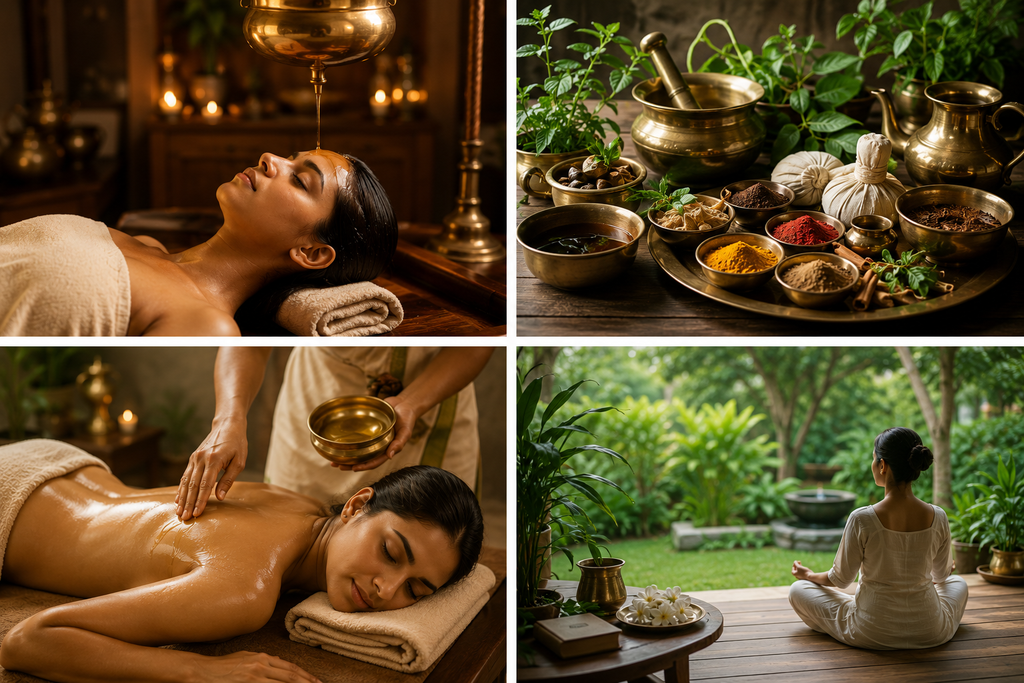
This preparatory stage, often referred to as Purva Karma, is intended to prepare the body for the therapeutic phase. Depending on the individual’s needs, traditional therapies such as Abhyanga and Swedana may be incorporated.
Abhyanga
Abhyanga is a traditional Ayurvedic oil therapy involving the application and massage of warm herbal oils according to individual requirements.
Swedana
Swedana refers to traditional Ayurvedic fomentation or sweating therapies that may be used as part of preparation when appropriate.
These therapies are not necessarily performed in the same way for everyone. The physician determines what is appropriate for each individual.
The Therapeutic Phase
After appropriate preparation, the selected therapeutic procedures may be carried out under professional guidance.
This stage is traditionally known as Pradhana Karma.
The emphasis is not on performing every possible therapy, but on choosing the procedures that are appropriate for the individual.
This is where personalised Ayurvedic care becomes particularly important.
Doctor Guided. Personalised. Traditional.
The Importance of Recovery
The Panchakarma journey does not end when the therapeutic procedure is completed.
Ayurveda traditionally places considerable importance on the period following treatment, known as Paschat Karma.
During this phase, the body is gradually guided back towards its regular routine. Appropriate food, rest, daily activities and supportive Ayurvedic recommendations may be advised according to individual needs.
A thoughtful recovery period is an important part of the overall Panchakarma experience.
Panchakarma Beyond Cleansing
Panchakarma is traditionally viewed within the broader Ayurvedic philosophy of maintaining balance and supporting wellbeing.
The experience may encourage greater awareness of:
Diet — understanding food choices and eating habits.
Daily Routine — creating more mindful and consistent routines.
Rest — recognising the importance of adequate recovery and sleep.
Lifestyle — becoming more aware of habits that influence everyday wellbeing.
Mindfulness — creating space to slow down and reconnect with yourself.
The goal is not simply to complete a treatment programme, but to understand how Ayurvedic principles may be incorporated into everyday life.
What Can Make the Panchakarma Experience Meaningful?
A Panchakarma journey is more than the therapies performed during a treatment session.
It can be an opportunity to step away from constant activity, create space for rest and pay closer attention to the relationship between lifestyle, diet, routine and wellbeing.
A pause from the outside.
A journey towards greater awareness within.
Panchakarma at MSM Ayurveda
At MSM Ayurveda, the Panchakarma experience is approached with an emphasis on personalised Ayurvedic care.
The journey begins with understanding the individual and continues through appropriate assessment, treatment planning, therapeutic care and recovery guidance.
Rather than treating Panchakarma as a fixed package, the focus is on creating an approach that is thoughtful, clinically guided and rooted in traditional Ayurvedic principles.
✦ PERSONALised Care
Your treatment journey is shaped around your individual needs.
◌ DOCTOR Guided
Your care is guided by an Ayurvedic physician following appropriate assessment.
❋ TRADITIONAL
The approach remains rooted in classical Ayurvedic principles and traditional therapeutic practices.
Is Panchakarma Right for Everyone?
Panchakarma is not automatically suitable for every individual.
Because some of its procedures can be intensive, an Ayurvedic physician should assess your health, strength, constitution and individual circumstances before recommending a Panchakarma programme.
The appropriate treatment, duration and procedures should always be determined by a qualified professional.
Begin Your Journey Inward
Panchakarma invites us to look beyond the idea of wellness as simply another treatment.
It is a traditional Ayurvedic journey that brings together preparation, therapeutic care, restoration and mindful living.
At MSM Ayurveda, that journey begins with one important step:
Understanding you.
Explore Panchakarma →
Rooted in Ayurveda. Personalised around you.